02 · Live platform
Darbدرب
One platform. Many businesses. Many paths.
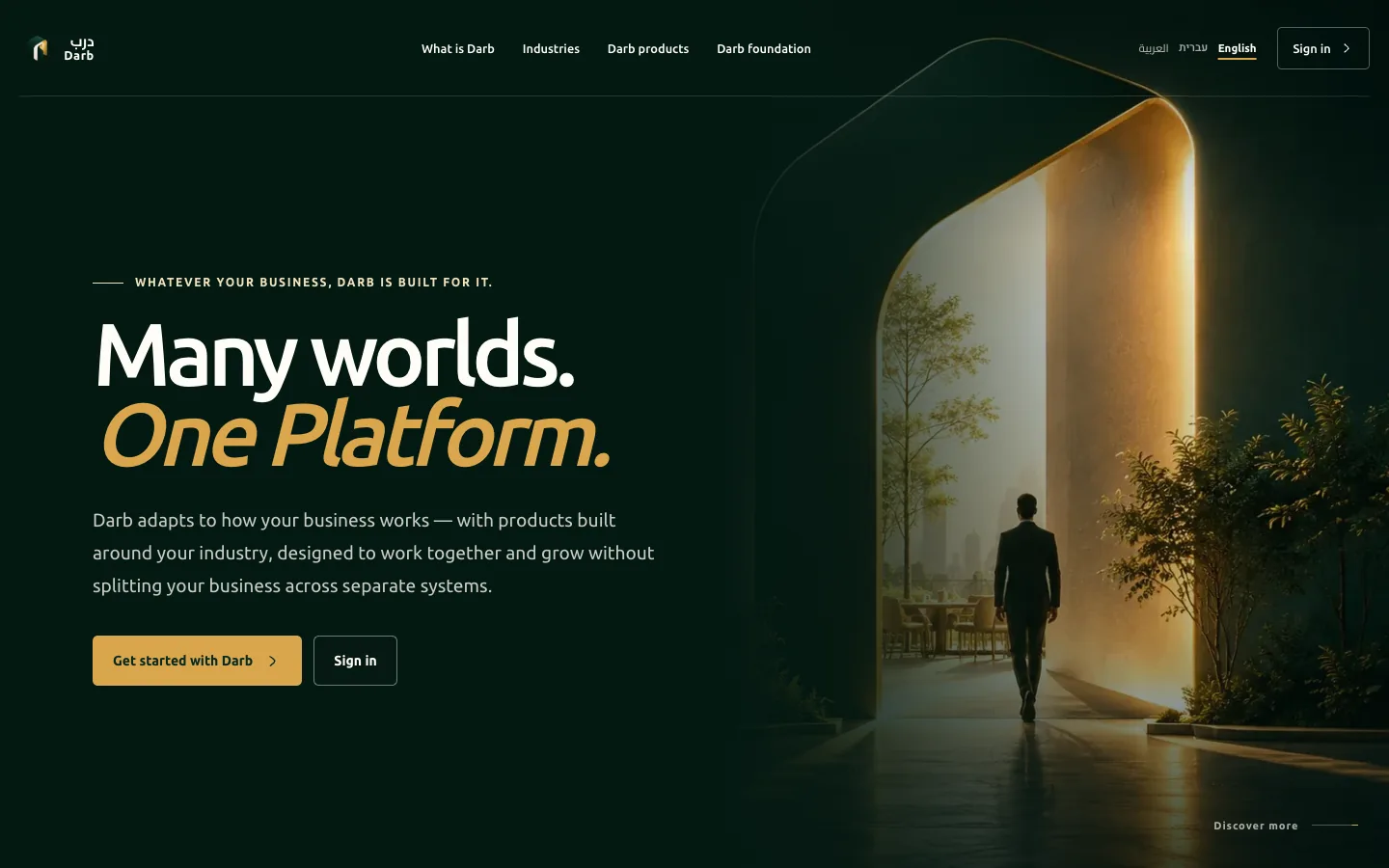
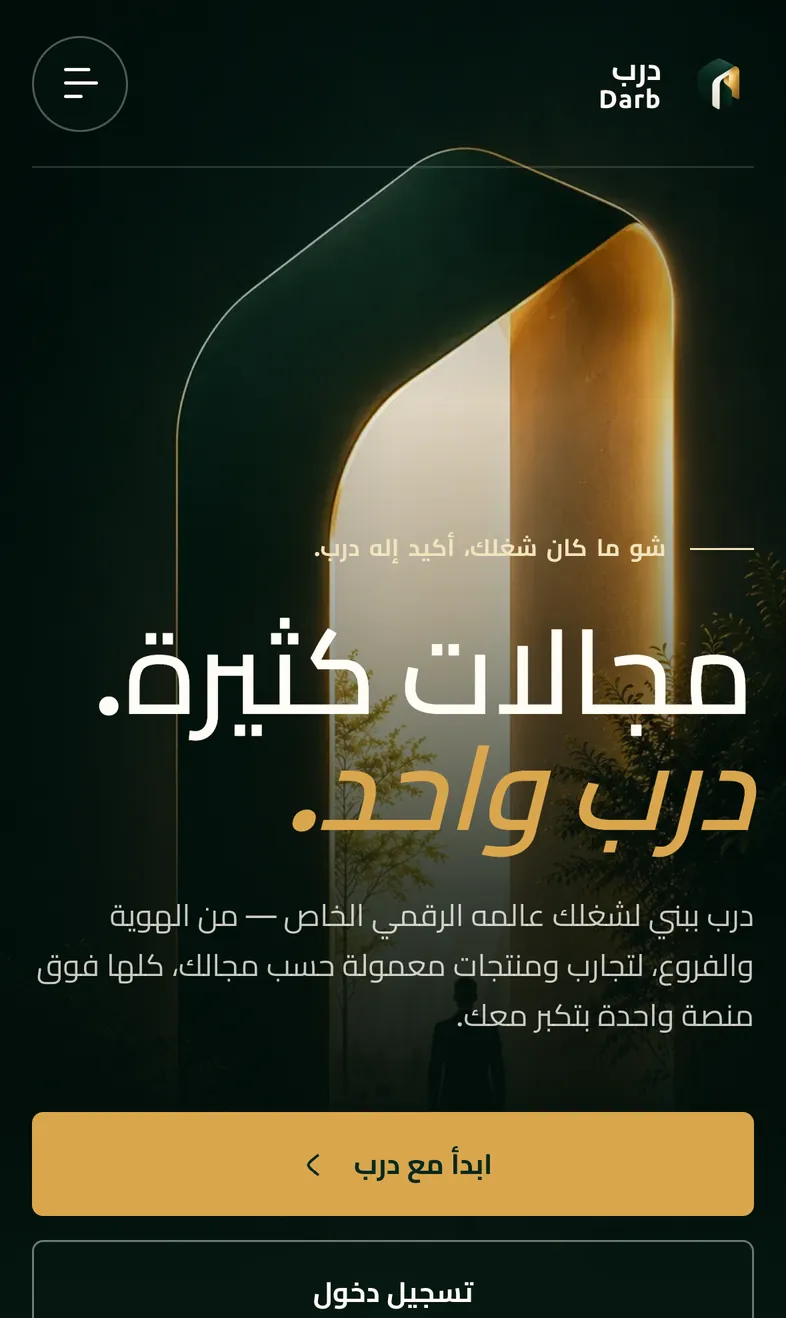
A multi-tenant business platform for the Israeli market, built for Arabic, Hebrew and English. A business registers, sets up its workspace and publishes a customer-facing product on a Darb subdomain or its own verified domain.
- Nour’s role
- Founder · Product engineering · Experience architecture
- Status
- darb.co.il is public. Restaurants are the first product engine; other engines are not built yet.
What is real today
Live
- Public company site at darb.co.il in Arabic, Hebrew and English
- Tenant admin and platform console
- Restaurant engine with public menus, and Darb REST in production
Not claimed
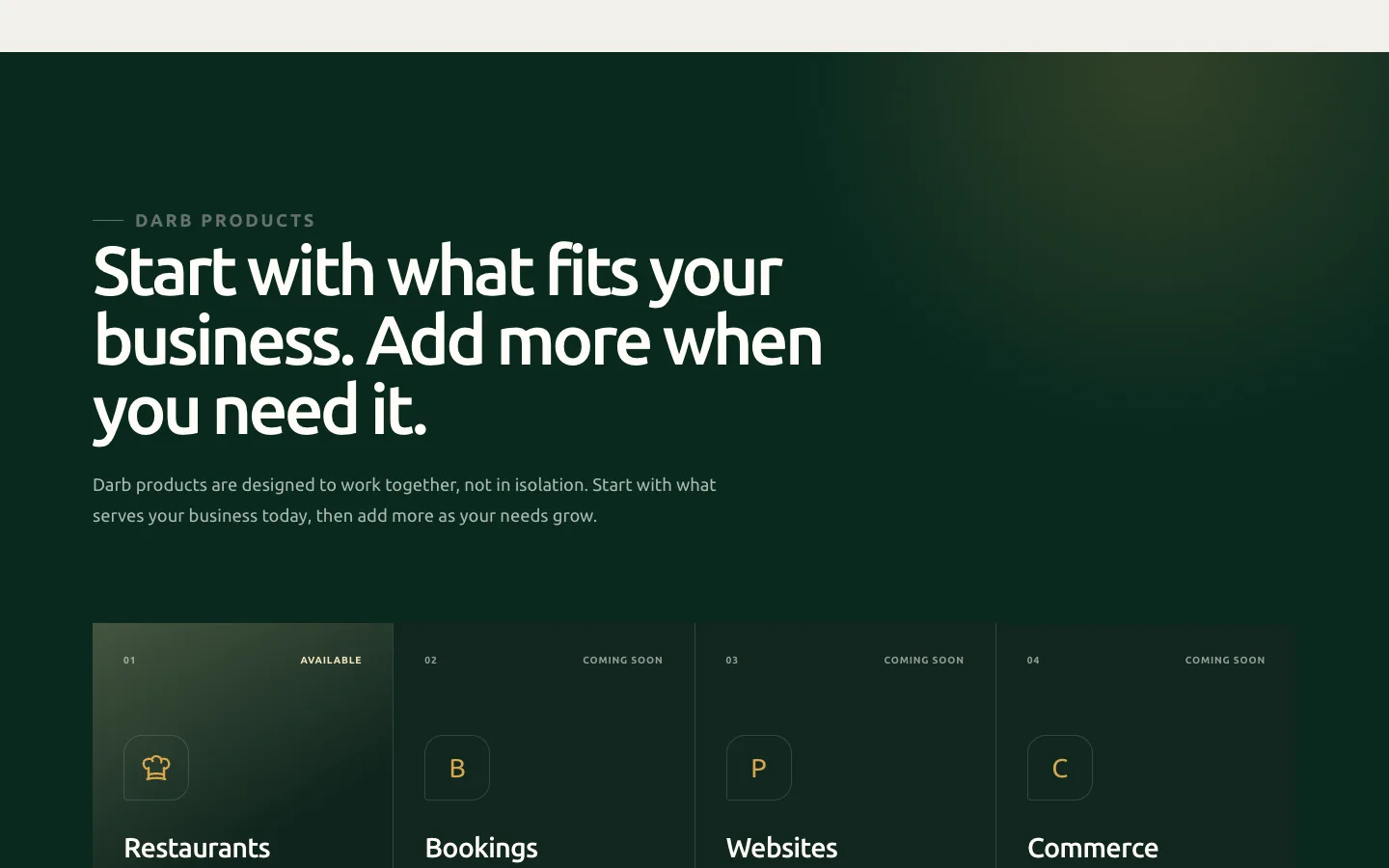
- Bookings, websites and commerce engines — listed as "coming soon"; no customer runtime exists
- Billing — plans and entitlements carry no payment logic yet
The problem
Local businesses are usually handed one generic tool, whatever their trade. A café, a clinic and a shop end up bending their work to the same forms.
In Israel the same customer base reads Arabic, Hebrew and English. Most software treats right-to-left as an afterthought: mirrored layouts, one font for every script, strings hard-coded in English.
How it works
01
One shared foundation — businesses, locations, locales, media, domains and audit — with each product engine behind its own schema and package boundary. Engine-to-engine imports are not allowed, so a new product can be added without reshaping the platform.
02
Tenant isolation lives in Postgres: row-level security, explicit grants and narrow RPCs that commit each change together with its redacted audit event.
03
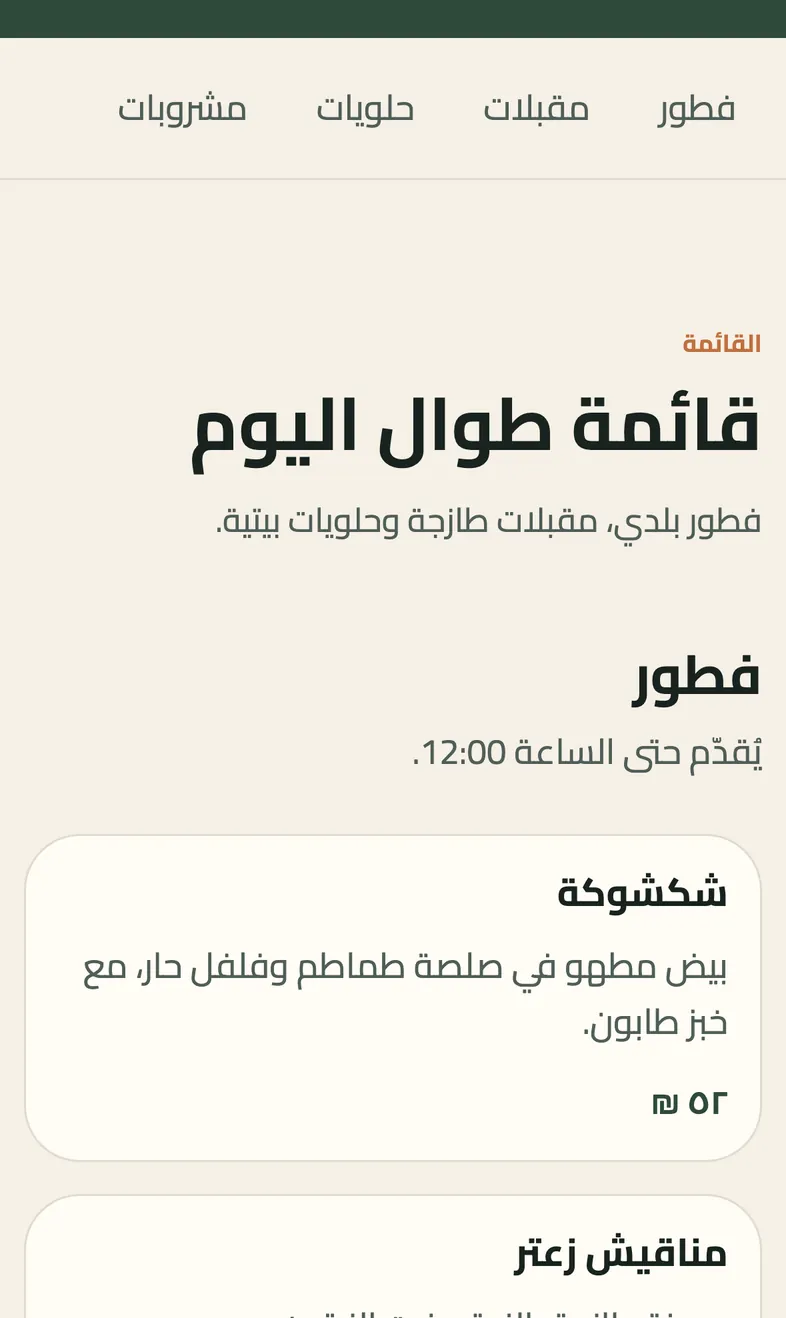
Typography is chosen by script, not by page locale: Cairo for Arabic, Heebo for Hebrew, Ubuntu for Latin. The tenant always comes first; Darb appears as an understated "Powered by Darb".
Try it
Beyond the gateway the platform branches. Choose a route to see what is built and what is not.
One foundation: businesses, locations, languages, media, domains and audit — shared by every engine.
Restaurants · Darb REST · Available
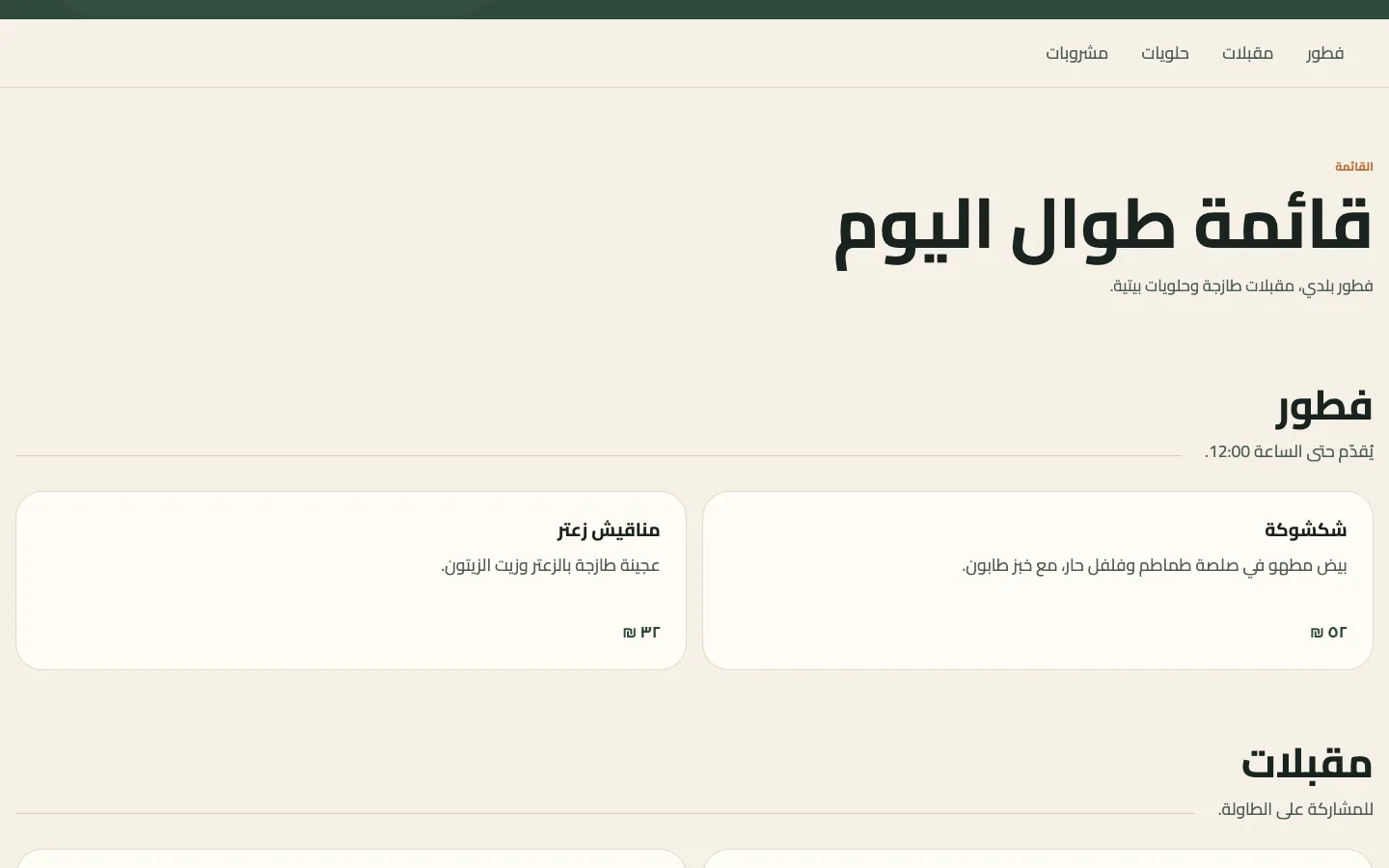
The first engine in production: multilingual menus and storefronts for restaurants and cafés.
Selected capabilities
Tenant admin
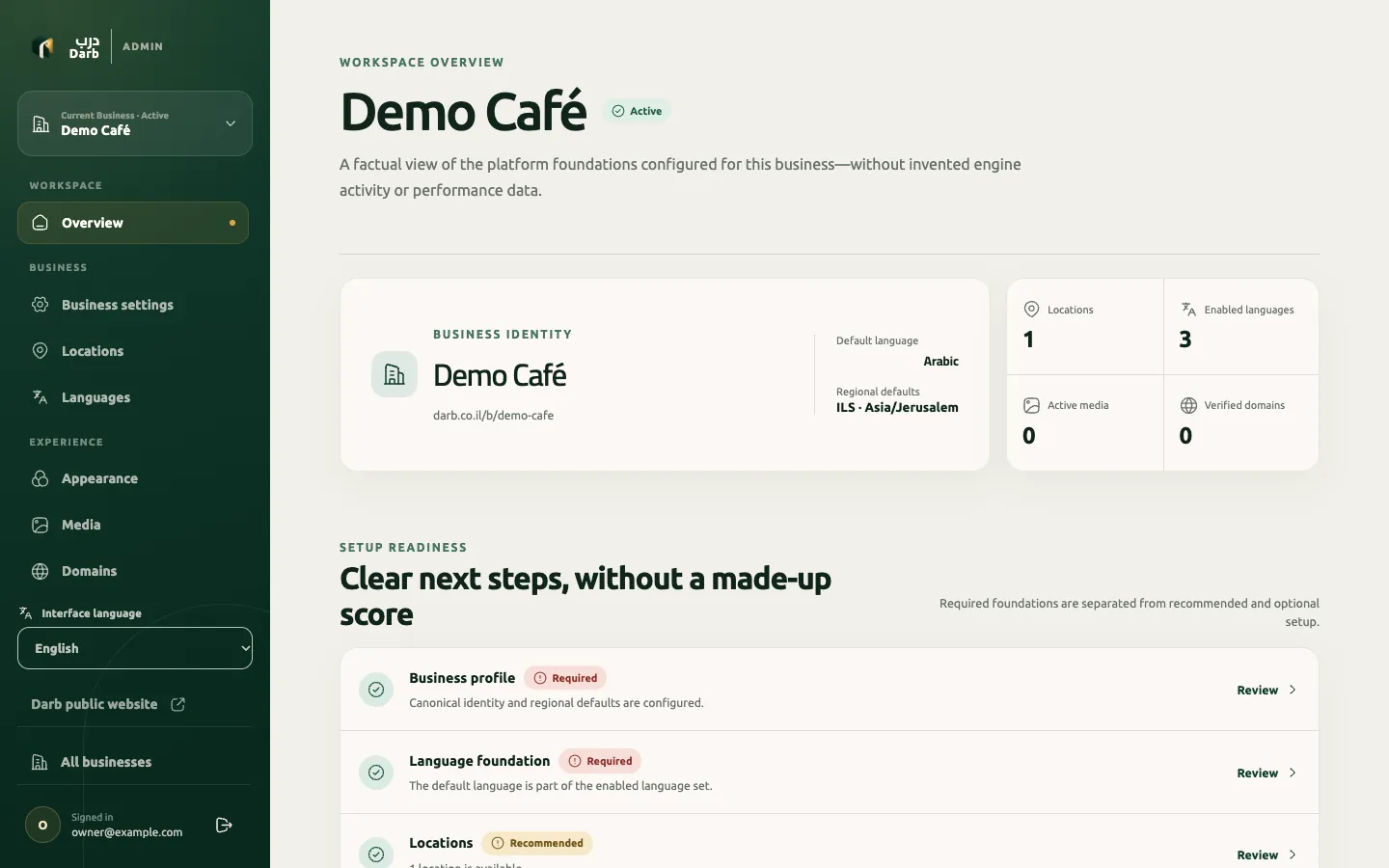
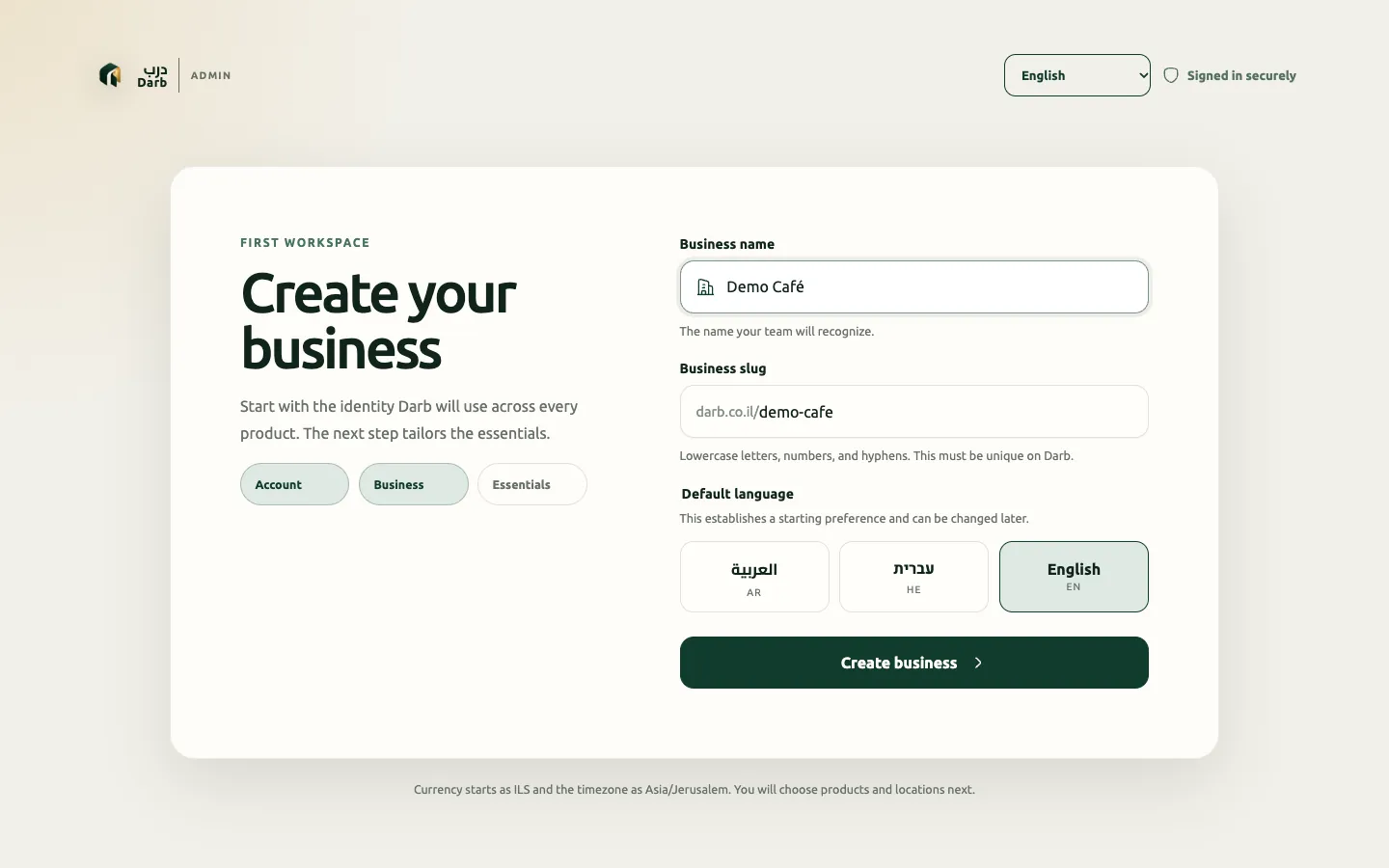
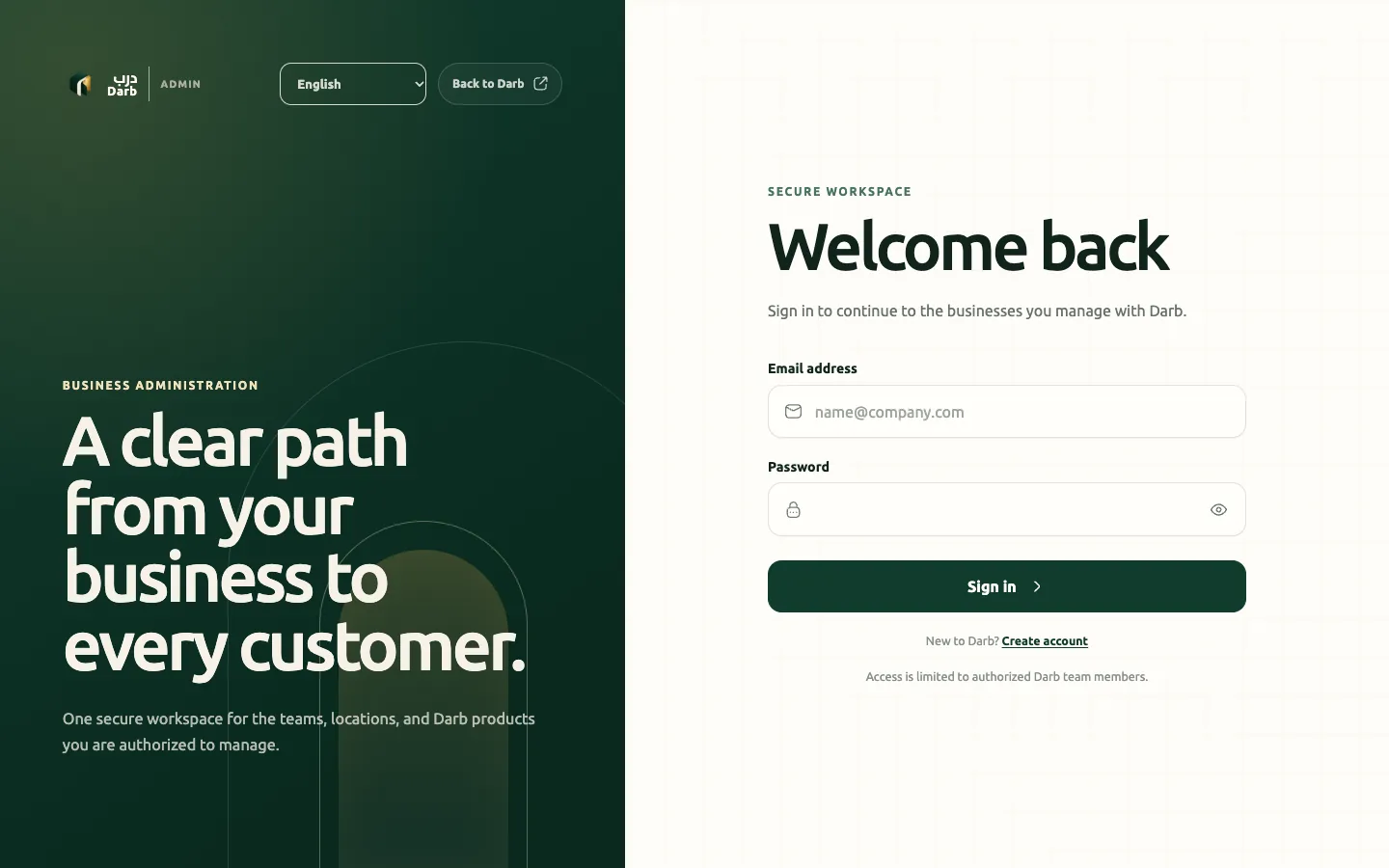
Self-service sign-up, resumable onboarding backed by an atomic database bootstrap, locations, languages, media library, custom domains and appearance under one workspace.
Restaurant engine
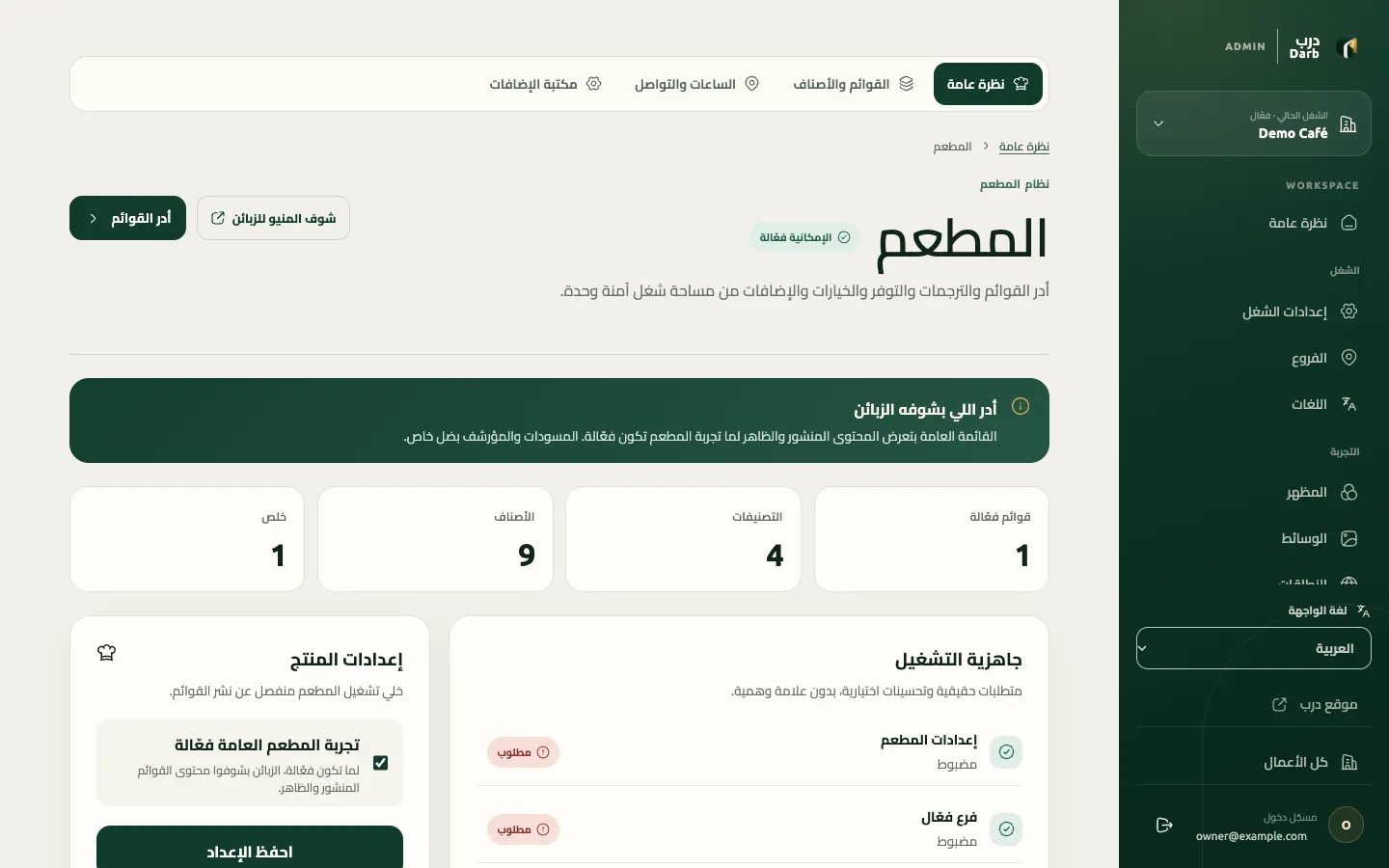
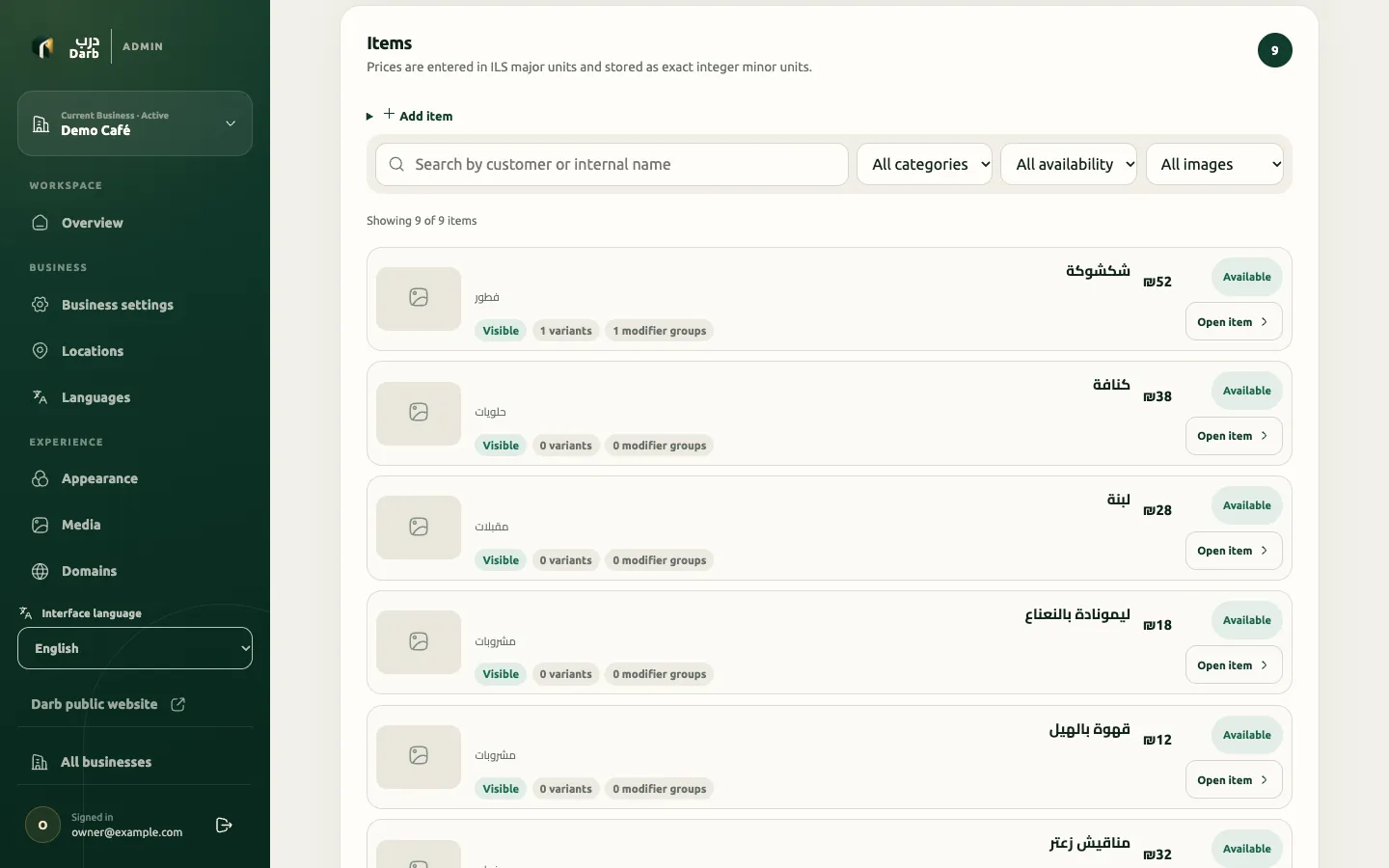
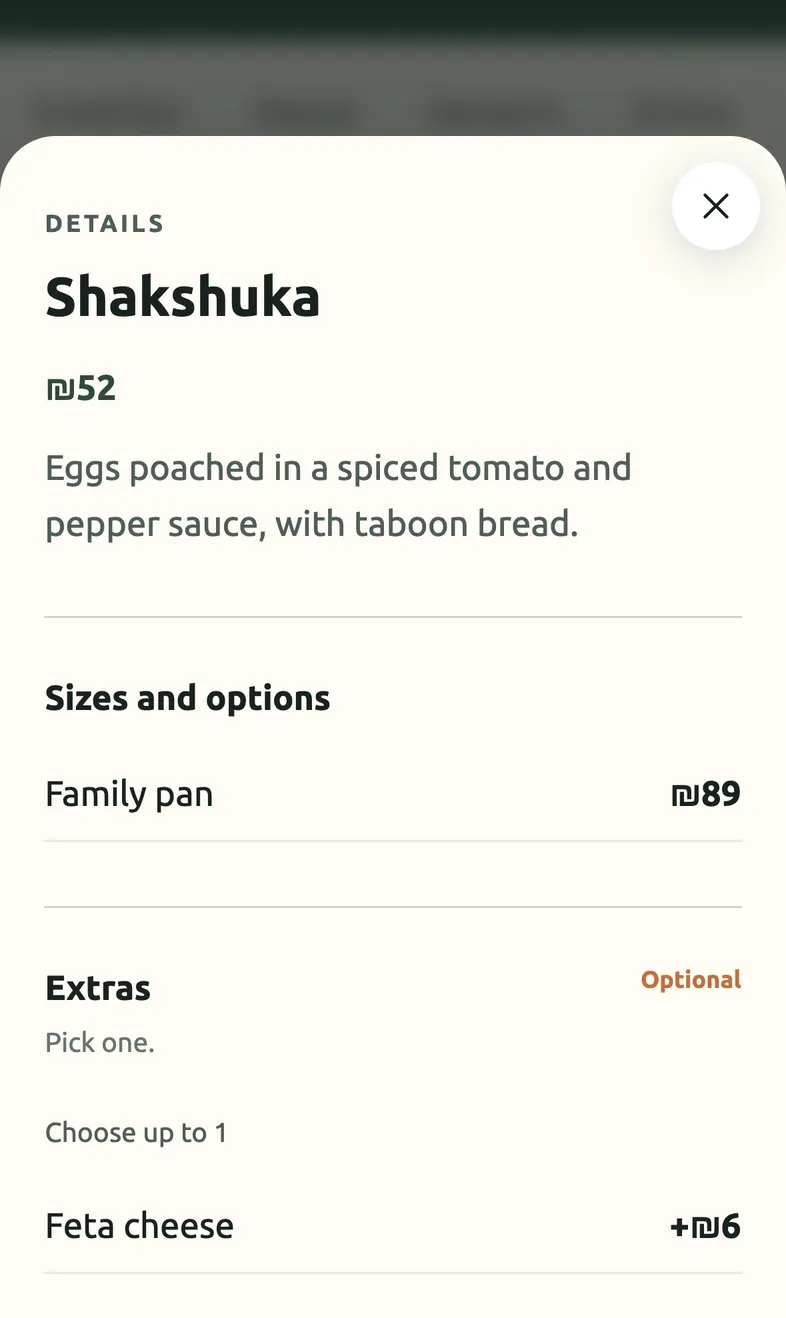
Menus, categories, items, variants, modifier groups, per-location availability, hours, branding media, publication and launch-readiness checks.
Verified custom domains
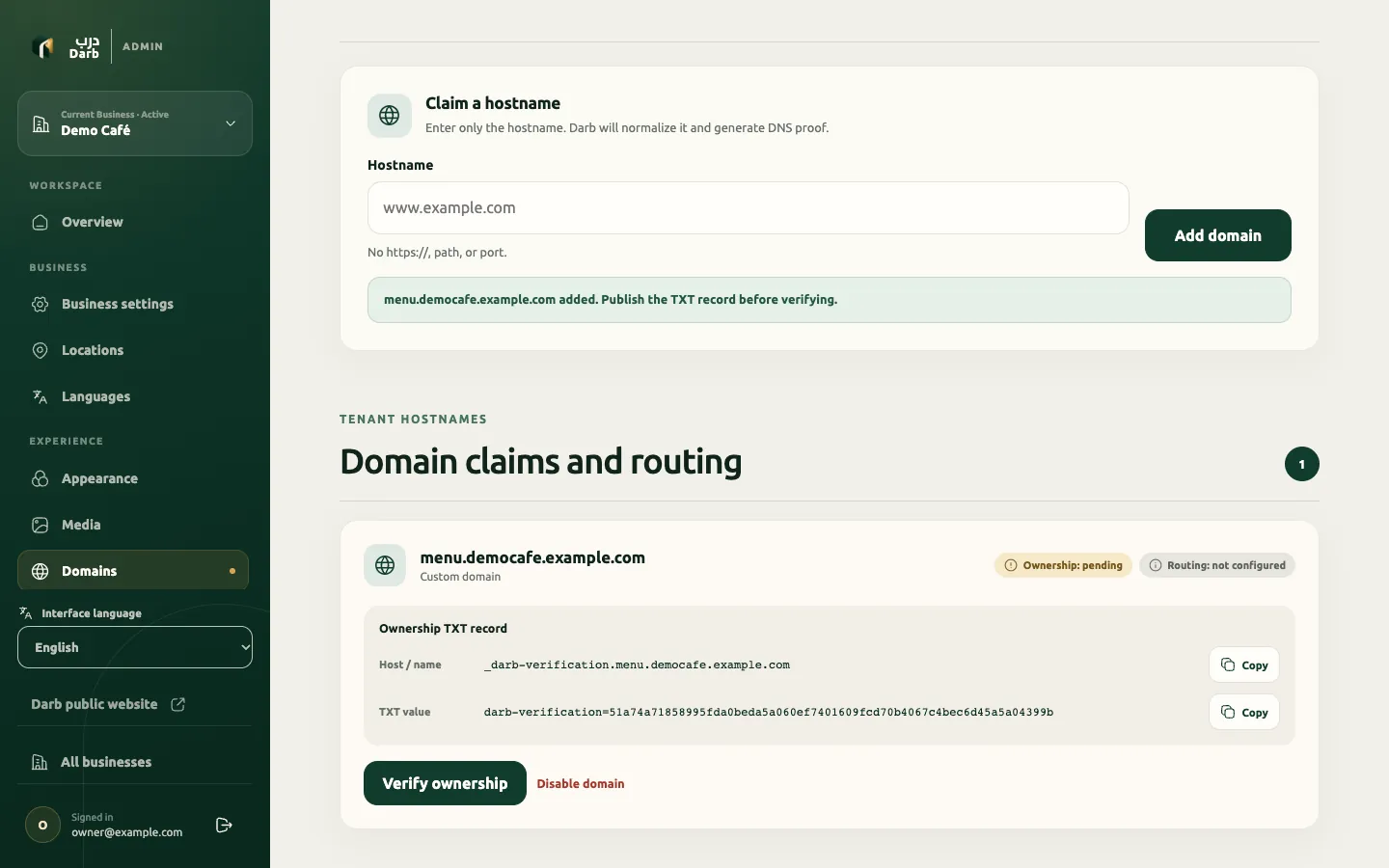
DNS TXT ownership proof plus hosting-provider attestation before a hostname goes live; verified hosts render through the same restaurant renderer.
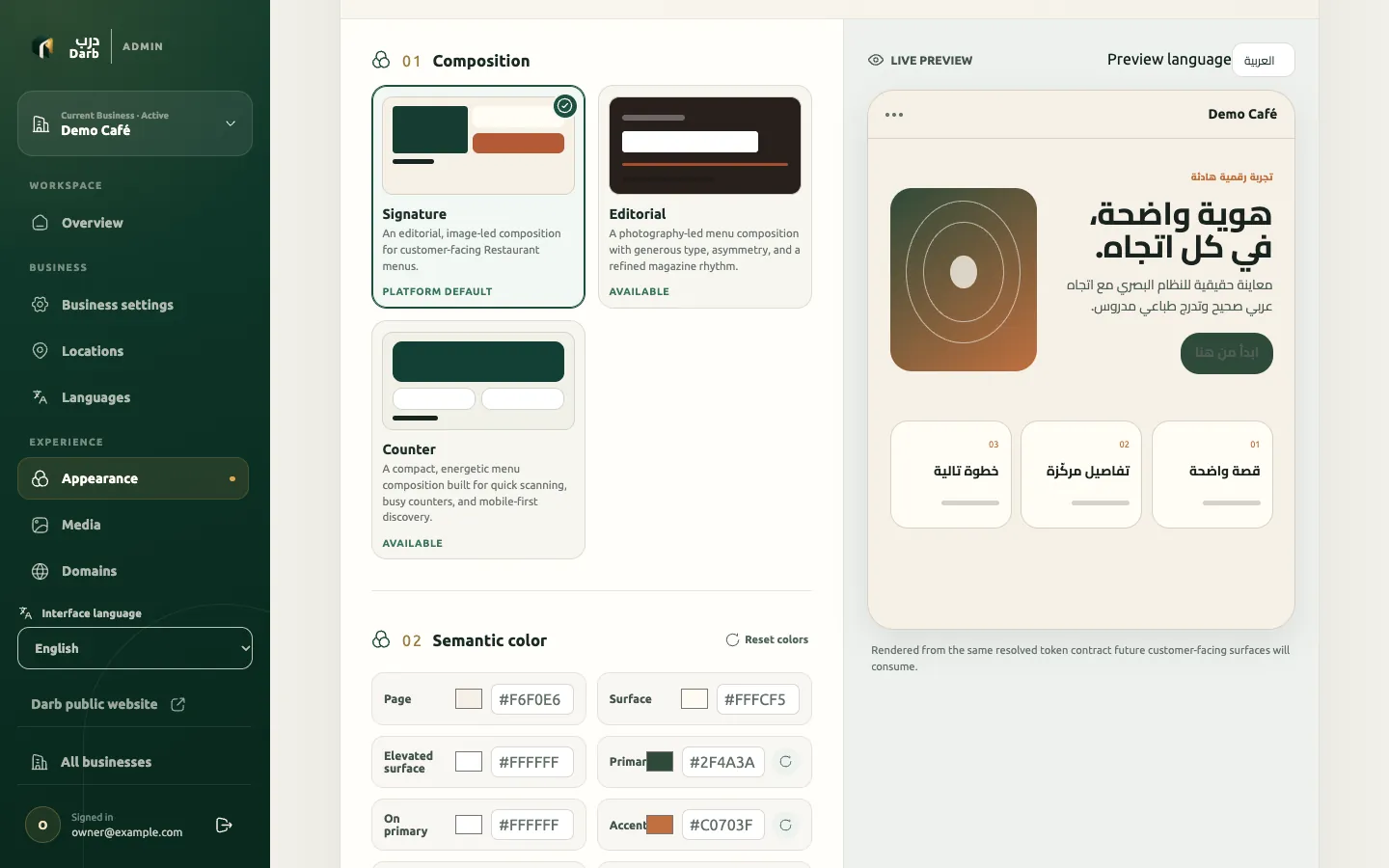
Closed theme contract
A fixed token set mapped to CSS variables with contrast checks, script-aware typography, direction and reduced-motion handling. Tenants cannot inject arbitrary CSS.
Platform console
Cross-tenant views of businesses, users, domains, modules and the audit log, with audited lifecycle changes and reasoned entitlement overrides.
Capabilities vs. entitlements
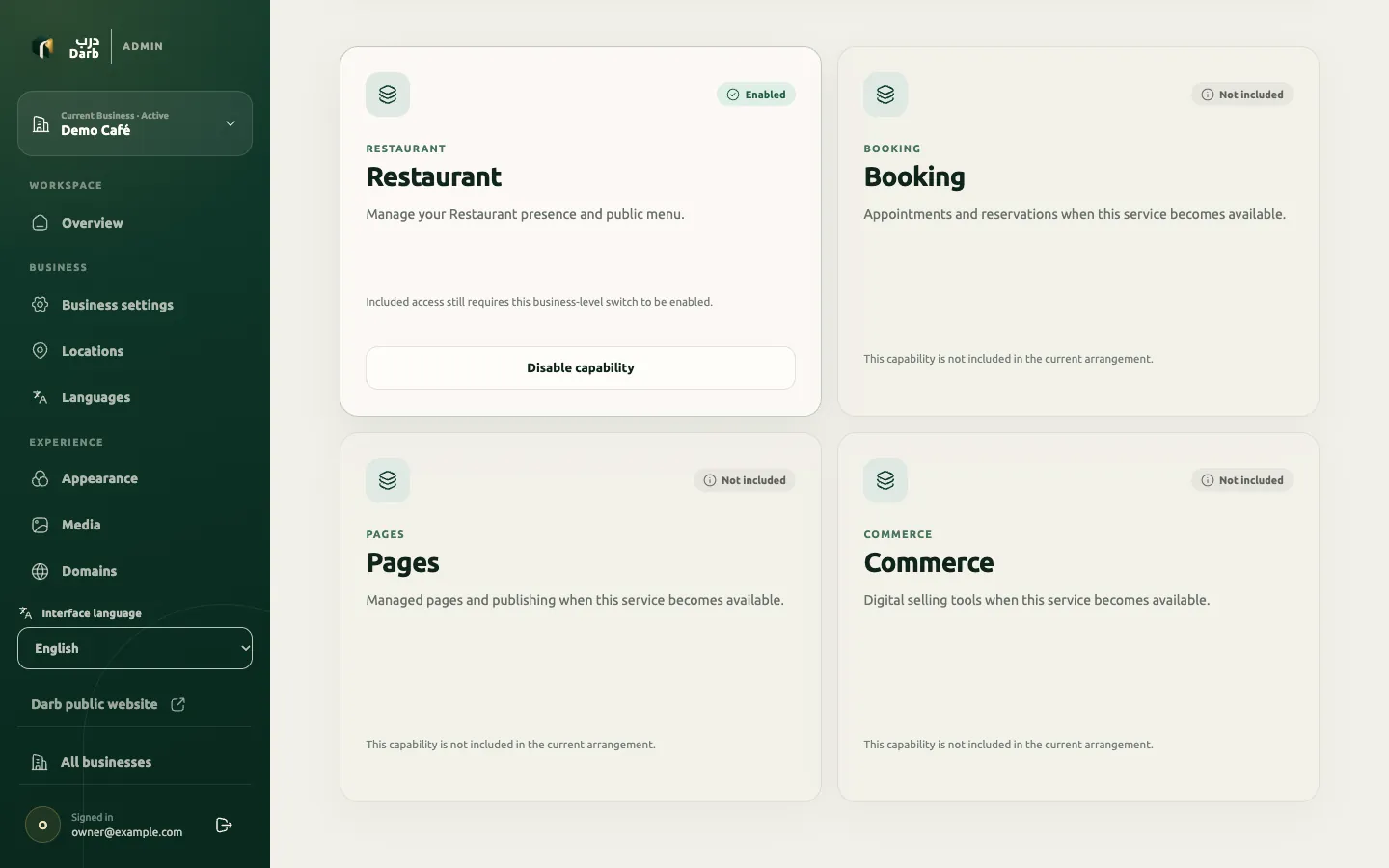
A module is usable only when it is available, entitled by plan or override, enabled by the tenant and the business is active. Provider-neutral, with no billing logic yet.
Architecture
Three Next.js applications on one Supabase project; engines sit behind their own schema and package.
apps/main · darb.co.il
Static /ar, /he, /en company site with per-locale metadata and hreflang. No database dependency.
apps/admin · admin.darb.co.il
Registration, onboarding, tenant workspaces, restaurant management and the /platform console.
apps/rest · rest.darb.co.il
Server-rendered public menus for platform slugs and verified custom hostnames.
packages
ui · icons · i18n · theme · database · restaurant · config · types
Supabase
core and restaurant schemas, private authorization helpers, storage, RLS and RPCs; tested with pgTAP.
- Next.js 16
- React 19
- TypeScript (strict)
- Supabase · Postgres · RLS
- Turborepo · pnpm
- Vitest · Playwright · pgTAP
The live product
Captures of the public production pages, and of the app running locally from its own repository with fictional demo data. No real customer or staff data appears.
From the repository